
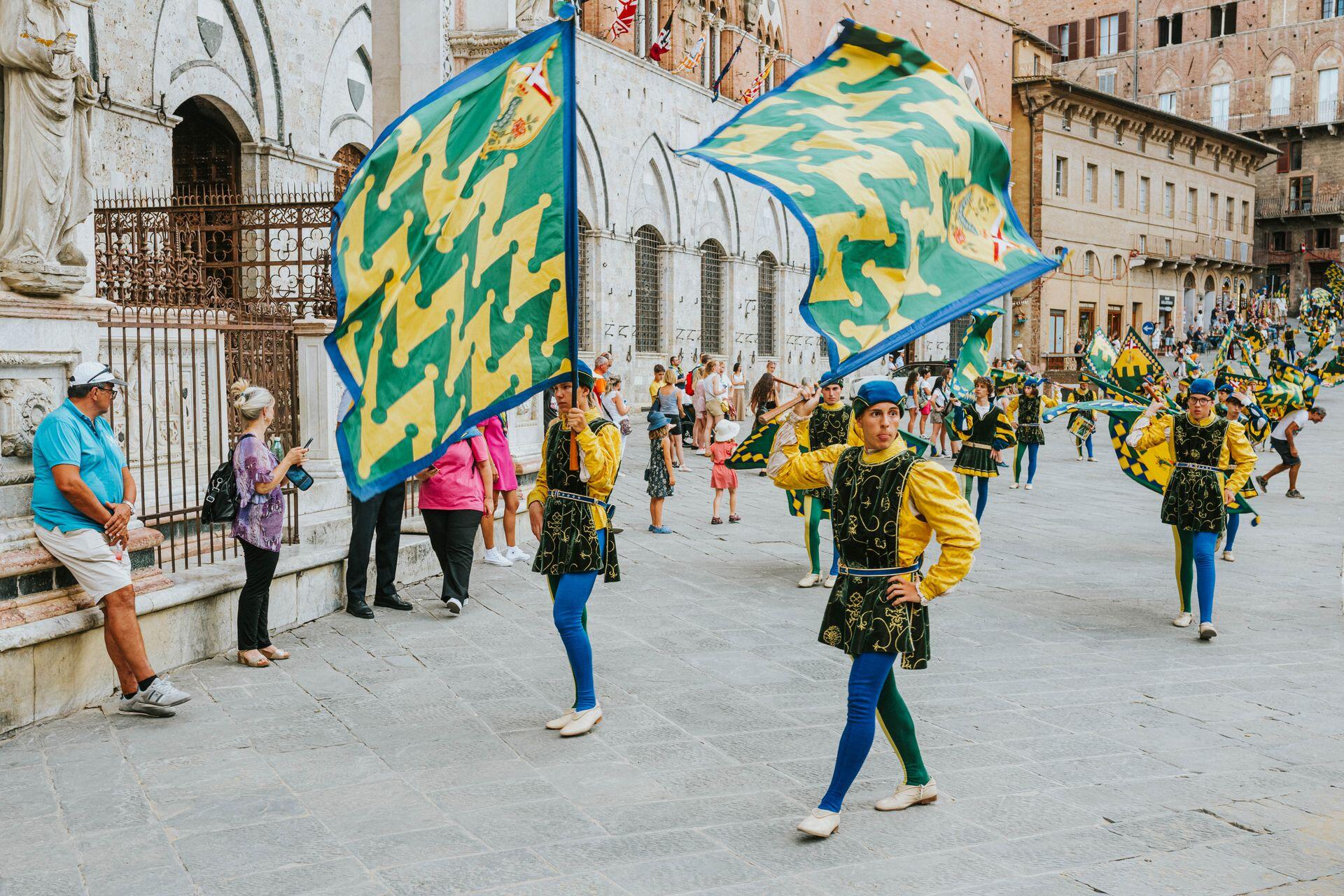

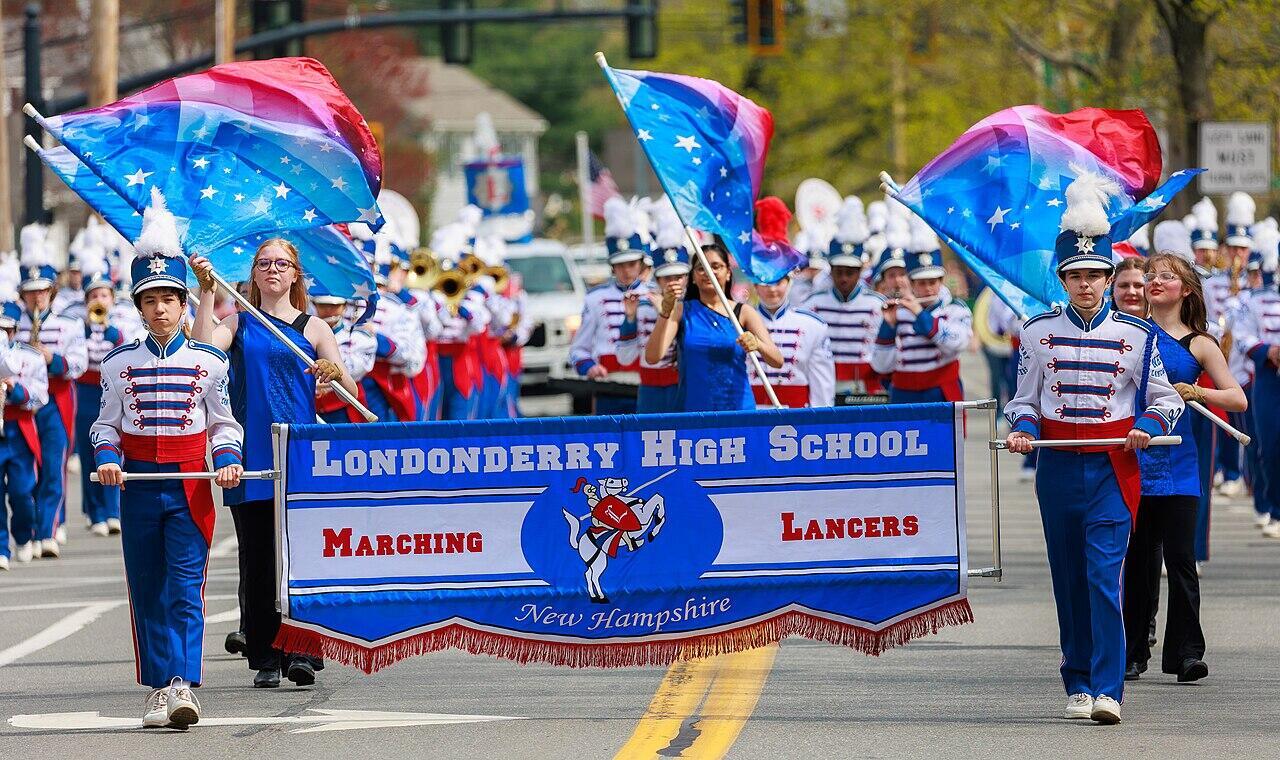
A color guard is the section of a marching band that provides a visually-interesting dance performance. They do not play instruments. Instead, they perform dance choreography and visual spectacle with flags, rifles and sabres. Color guard is more popular and common in North American bands, especially in U.S. high schools and universities, as well as drum corps.


Define the Role of Color Guard
A color guard is a team of performers within a marching band or drum corps that performs choreographed routines while the musicians play. The purpose is to accompany the marching band with interesting visual components, adding spectacle for audiences. They can also be used by musicians to stay on rhythm through visual cues, but the drum major is the main role keeping time.
Color Guard in Marching Band and Performances
In a marching band, the color guard usually performs on the field or in the parade route alongside the musicians. They may be dispersed throughout the instrumentalists or separated in their own section.
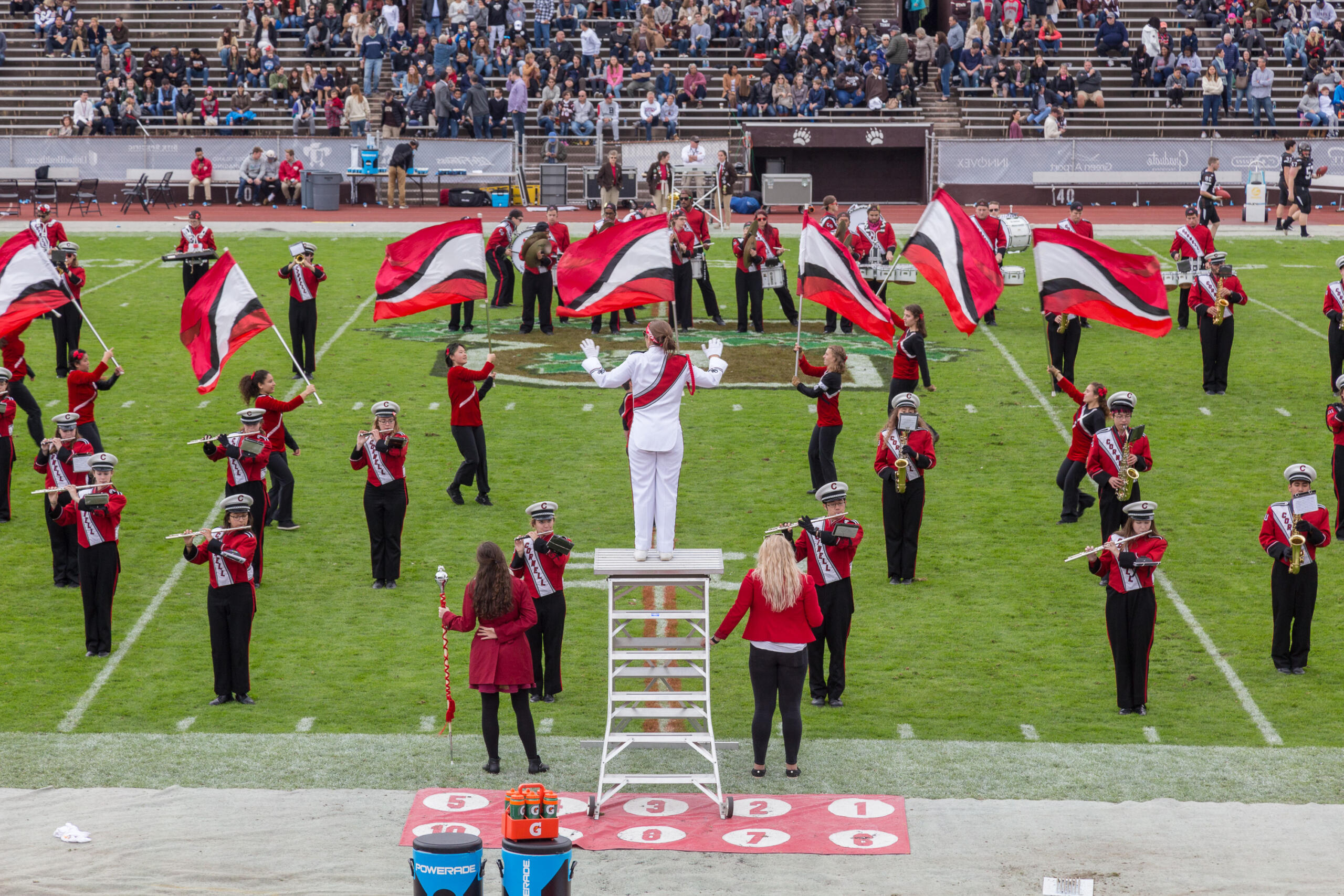
During a field show, guard members may be placed across the front, sides and centre of the formation so audiences see visual activity across the whole space. In parades, there may be a handful of guards between instrument sections, or there could be one or two large sections.
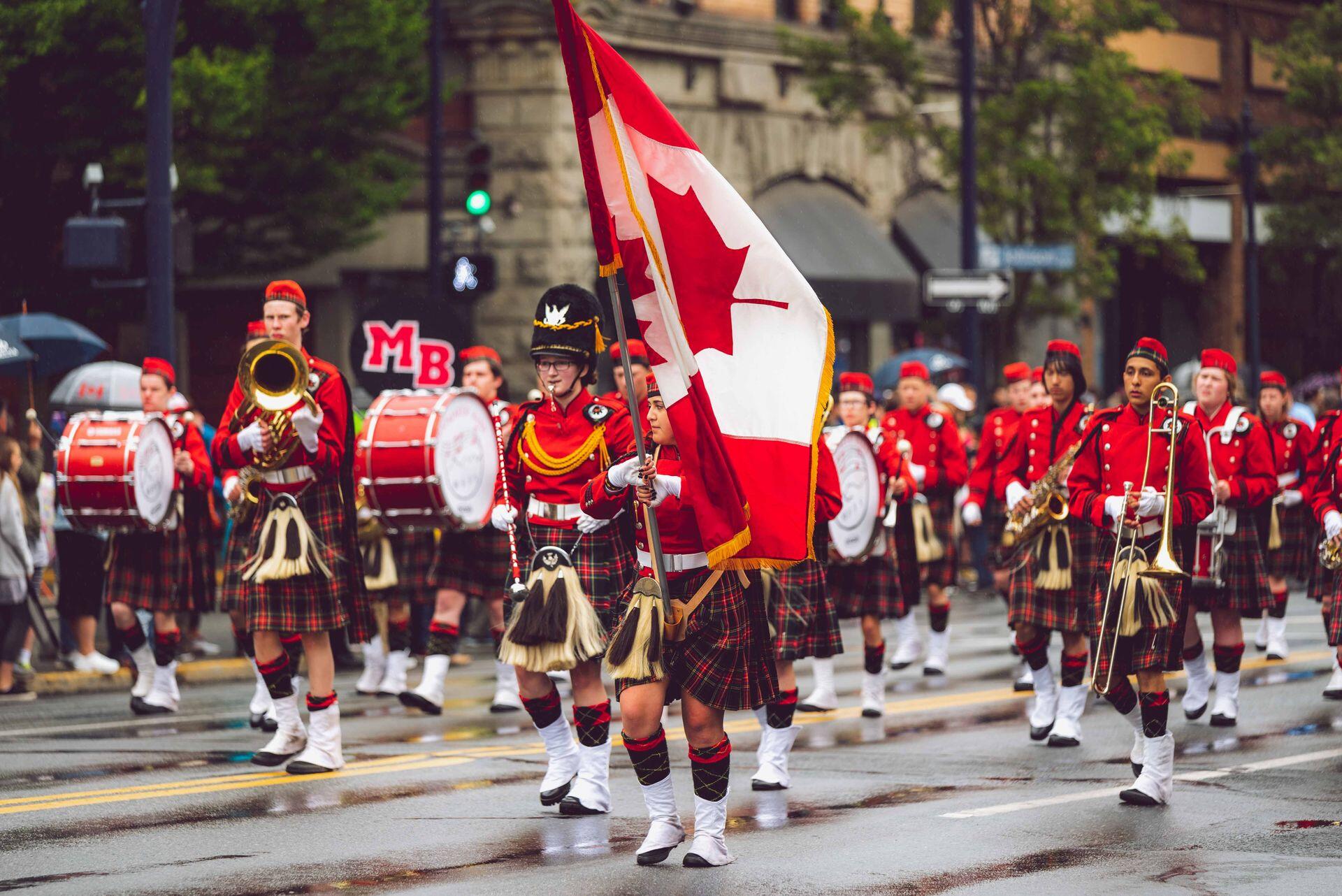
Color guard routines mirror the music and band movement. During sharp percussion sections, they may use precise, quick flag work. In a lyrical brass section, they may use long flag sweeps and slower dance moves. During musical climaxes, a group toss can punctuate the moment.
In artistic shows, color guard can also be used for conveying ideas. For example, a programme about changing seasons can incorporate different colours, materials and style of movement to signify different seasons.
What Does Color Guard Signify?
Color guard has foundations in ceremonial flag-bearing. It carries the ideas of honour, respect, unity and identity as traditional values. In a marching band, these core ideas are expressed through artistic performance rather than military duty.
Guards of Colour
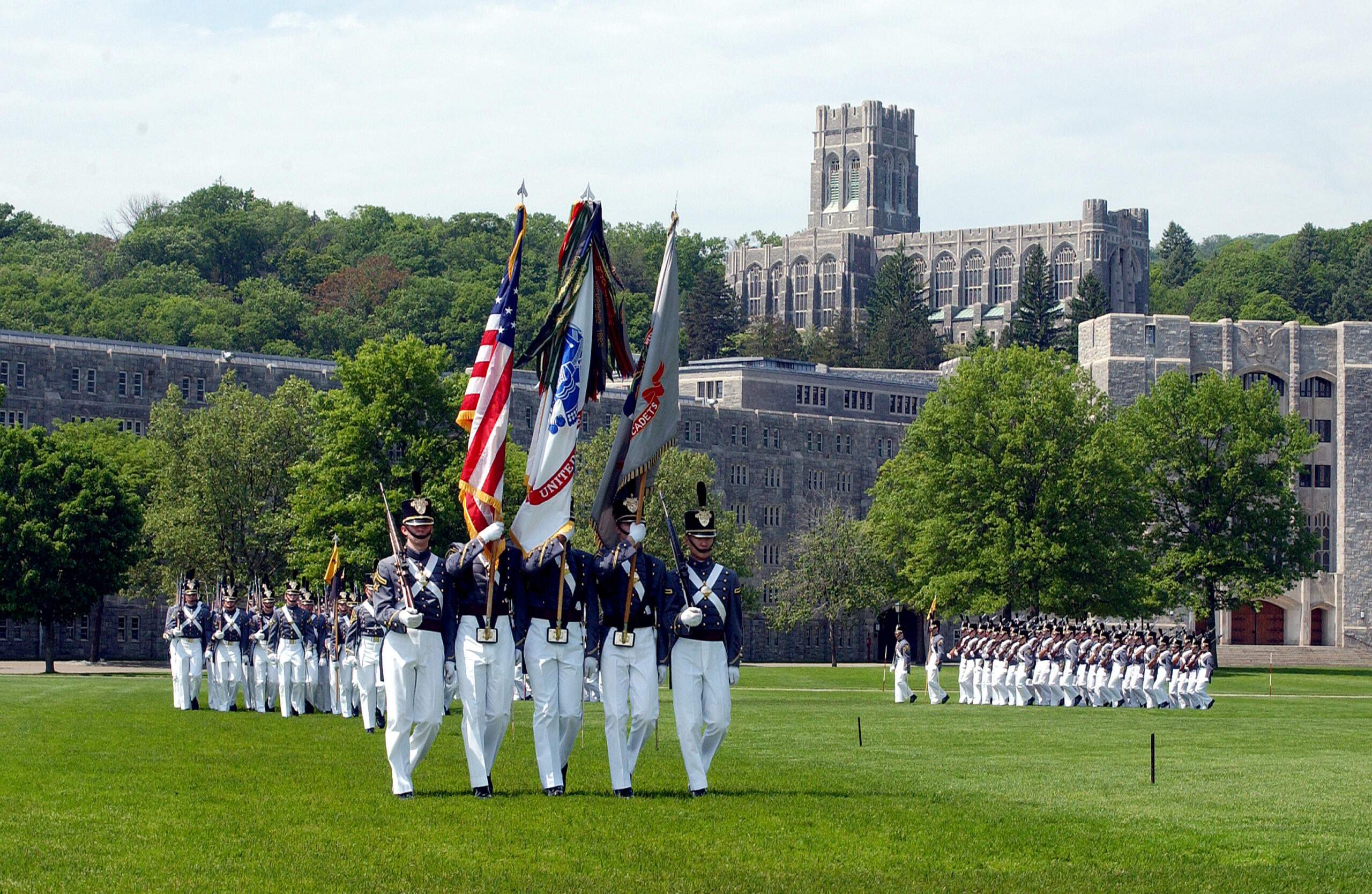
The word “color” in the title traditionally refers to the official national flag. Historically, “color” specifically refers to the American Flag, since the tradition of color guard was started by American army soldiers during the American Revolution. The flag-bearers in battle acted as inspirations, motivations, and morale-boosters so soldiers maintained their will to fight. If the American flag was still raised, it meant the battle was not lost.
They, like the percussion section and fife, also conveyed messages and commands over distances.
Outside of active battle, color guards marched officially with flags in coded capacities. For example, the flag couldn’t be lowered past a certain point, it must never touch the ground, and it should be vertically straight or at a specific angle at certain times.
An extended modern definition can be that the “color” can be any national, regimental or organisational flag to self-identify the group.
Honour and respect
Flags have long been used to represent a nation, institution, group or cause. In contemporary shows, performers treat flags bearing official symbols with reverence. They are tasked with honouring their organisation and demonstrating good treatment of its symbols.
Flags without official symbolism are more appropriate for twirling and waving, but it’s generally disrespectful to do that with official flags.
In the 1940s, high schools and colleges in the United States began expanding their marching band programmes, including color guard. The sport was invigorated in the 60s and 70s, when it became more popular for the guard to incorporate more movements. Eventually, it became a well-respected art in its own right. Today, they are a frequently revered part of marching band performances and some bands even have instrumentalists performing choreography, too.
Unity
The guard demonstrates unity through synchronisation of movement. When many members perform various choreography movements together, it feels powerful because it is a shared experience that depends on each person doing their best. When combined with the musicians of the band, the effect is even stronger.
Identity
The colour guard often makes a marching band more memorable through personality. The band’s visual identity includes uniforms, but also the flags, movement style, and show concept. In some contemporary bands, the musicians and drum majors can even join in on the choreography, which contributes to the band’s overall reputation.
What Do the Different Colours Mean?
Naturally, the uniforms and flags used in color guard usually match the colours of the organisation they belong to. But, in artistic performances, the flags can be used for symbolism within the music’s theme. For instance, a deep blue flag can suggest nighttime, while a red flag can evoke energy, conflict or celebration.
The materials also change the audience’s interpretation and understanding. Long, light fabric may flow in a gentle way to accompany a ballad, while bold patterns and short flags can achieve fast, sharp movement.
What Do Color Guard Performers Do?
Color guards in modern marching band settings provide visual storytelling and enhancement to accompany the music. They may present the official colors and use traditional props and movements (though, these flag-bearers are usually called the color team instead). But they are more well-known today for using non-official flags and props like rifles and sabres while performing intricate and incredible choreography.
Winter guard is a popular competition that features just the color guard without any live marching band. It focuses more on performance art.
Drum Corps is another league that has both marching bands and color guards perform, often with highly impressive routines.
Choreography and Movement
Choreography in color guard includes dance, steps, turns, jumps, poses, travelling patterns, expressive gestures, and twirls. The movements match the rhythm and intensity of the music, tying the visual and audial experiences together.
The entire guard company or sections of the group may mirror different instrument groups. For example, a section of the guard may use rifles and more strong movements to back up the brass section, while another section may use flowing movements and colourful flags to accompany the woodwinds.
Color guard helps maintain rhythm with their movements, giving visual cues to the musicians so they can stay on beat. They also rely on the music and the drum majors to stay on beat themselves, especially during moments of more fluid or complex movements.
Elements of a Color Guard Routine
- Spinning and tossing a flag
- Marching or moving across the performance area
- Dance and expressive body movement
- Presenting or twirling replica rifles or sabres
- Changes of costume or equipment
- Group formations that mirror the band’s drill
Equipment Handling
Performers learn how to hold, wave, carve, sweep, spin, toss and catch their color guard flag safely and with flair. Additionally, they may learn how to handle rifles and sabres, depending on the specific type of marching band they’re in. They may also be responsible for placing, moving and removing props from the field.
Color guard members require months of practice to master the movements for simple routines. Experienced guards can execute incredible feats with their bodies and equipment.
These items are replicas made specifically for performance. They are used because they harken back to the military traditions of marching bands and color guard. Though the rifles do not shoot, and the sabres are dull, they can still be dangerous. Performers must have lots of practice with these items to be able to perform with them safely.
Team Coordination
Color guard acts as a single unit; only a soloist would act as an individual, and only during their solo moment. Each member has an individual role that meshes with the rest of the company and supports the overall visual and functional results. The effect is that audiences see a unified group acting in unison even across large spaces.
Color guards practice rigorously in rehearsals to learn how to execute their precise coordination:
- Starting and finishing movements together
- Matching flag angles and body shapes
- Keeping consistent spacing and pace
- Moving safely through formations
- Recovering calmly if an error occurs
Also important is team synergy off the field. Members should feel camaraderie and offer support to their teammates in rehearsals. A strong team bond is required for strong performances. The same is true for players of all the instruments in a marching band.
A guard may have performers at different skill levels, especially at younger levels or in community groups. Good staging and choreography choices allow newer guards to support and improve while allowing more advanced guards to showcase their skills; everyone contributes and nobody feels favoured or neglected.
Color Guard Flags and Equipment
Color guard members mainly use flags, rifles and sabres, though they may incorporate additional props as well. Props and further equipment are more common in competition settings, rather than field performances at sports games and parades.
- Flags: Consist of a pole with attached silk or synthetic fabric. They often have a weighted end that helps the flag move properly and allows the performer to execute certain movements.
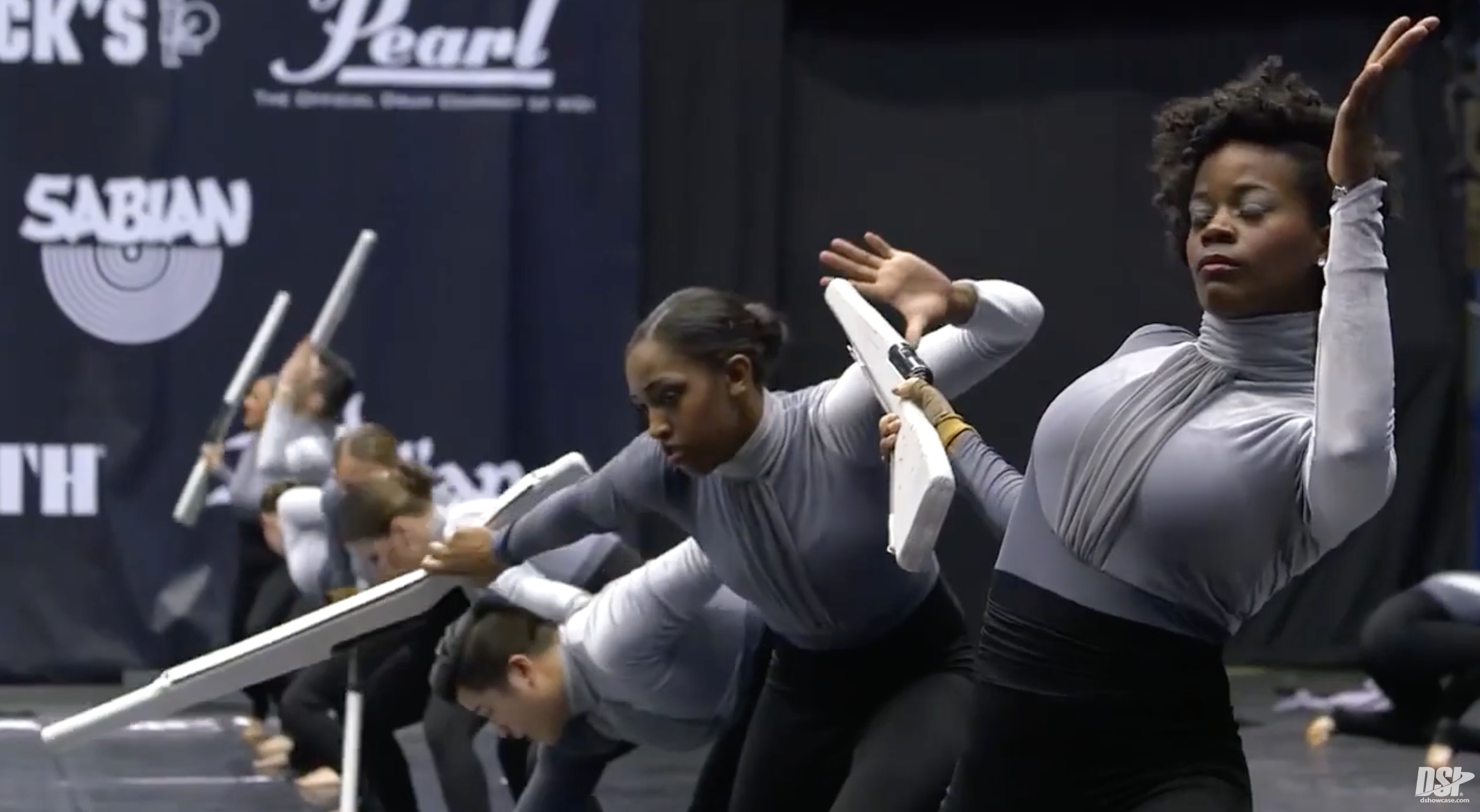
- Rifles: Usually non-firing replicas made specifically for routines. They can be used as static props that are simply held and perhaps presented in different military-style movements, or part of more intricate routines that include flipping, tossing and catching.
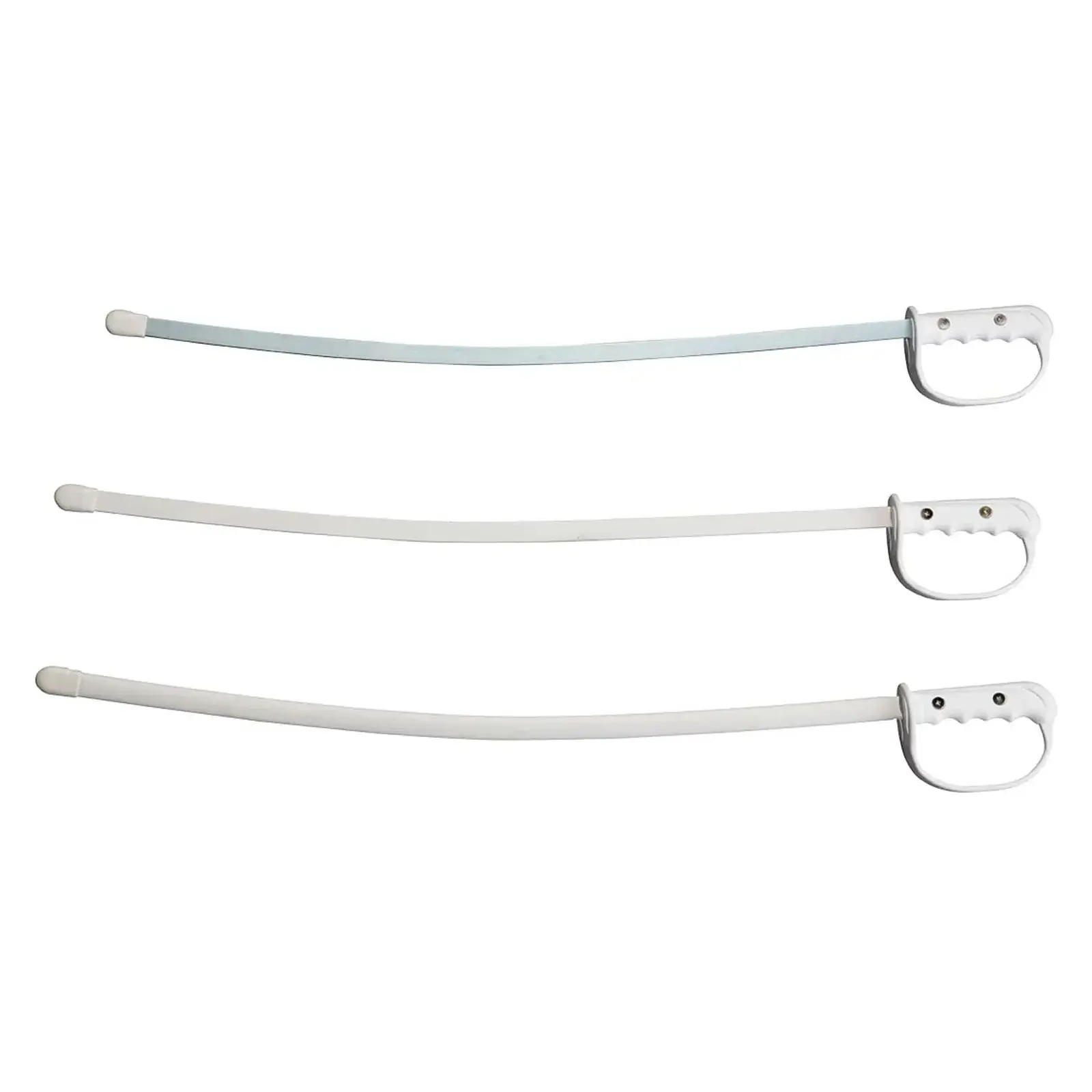
- Sabres: Replica swords usually saved for advanced routines. Like rifles, they can be presented in static or simple movements or used for elaborate choreography. They require extensive safety training.
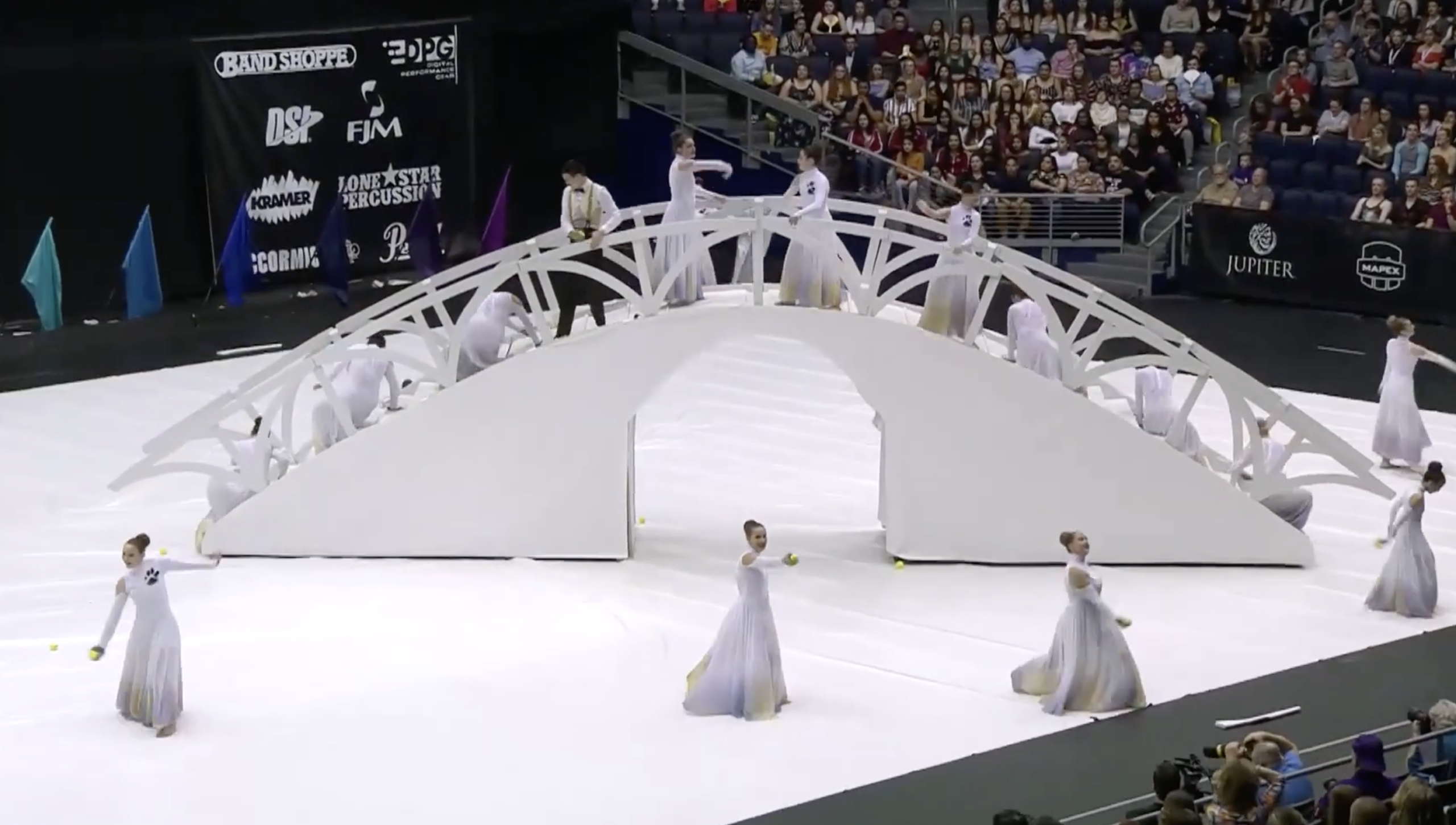
- Props: Dance-heavy routines and those that tell a story (more common in competition settings) can include objects like fabric panels, frames, benches, platforms and scenery that the color guard may be in charge of moving around the set.
- Dance equipment: Scarves, ribbons, hoops and other similar items can add more texture and movement to the routine.
Essentially, flags are the main item in color guard. Sabres and rifles are like auxiliary instruments, only being used sometimes.
Color Guard Costumes and Uniforms
Color guard costumes support the programme’s visual design and concept. For standard performances, they may match the marching uniform. In competition settings, they are more likely to have distinct costumes, and different sections may even have their own designs.
Traditional color guard uniforms were military or matched the stiff regalia the musicians wore. As it became more popular, color guard uniforms and costumes started to change to allow more movement. Their typical getup incorporates stretchier clothing that lets the guard perform all their choreography easily.
Performers usually wear color guard gloves to protect their hands from cuts, scrapes, and abrasions, especially when they do a lot of spinning. They are fingerless and have extra padding on the palms. They can be skin-toned or colourful. In color team or honour guard (which operate in an official capacity, such as for national presentations), they may wear white gloves with fingers.
How Color Guard Fits into Marching Bands
Today, color guard is an integral part of a marching band. They are a key element in the visual ensemble. Musicians create sound, and certain instruments, such as the trombones in the brass section, can also be used for visual spectacle, but the majority comes from the flags and other props wielded by the guards.
In competitions, they add to the storytelling being conveyed by the band’s overall performance. In field shows, they can fulfil many roles within the overall formation, like framing the musicians or adding flair to crucial locations. In parades, they usually break up or separate sections of musicians.
Overall, color guard is like the icing on top of the foundation of various musicians in a marching band performance. They help keep audiences more engaged with intriguing visuals and exciting moves. In modern performing, they are often as anticipated and expected as any other section of the band.
References
- “All About ‘Color Guard’ and ‘Color Team.’” The DrillMaster, 4 Feb. 2013, thedrillmaster.org/2013/02/04/all-about-color-guard-and-color-team. Accessed 7 Oct. 2026.
- Black, Kalee. “Top Ten Color Guard Moves.” Medium, 22 Nov. 2019, kblack8.medium.com/top-ten-color-guard-moves-407bf6aa5f20. Accessed 7 Oct. 2026.
Summarise with AI:
Did you like this article? Leave a rating!

 Loading...